
Posidonia: a vital marine plant for biodiversity

Italy, together with several other countries such as France, Spain, Greece, and Turkey, is considered an anchoring hotspot.
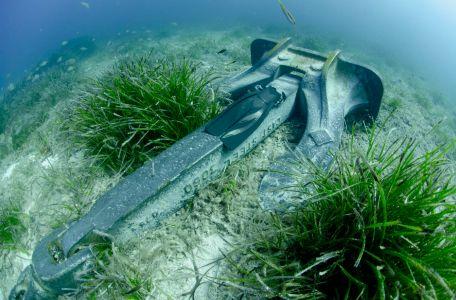
In Golfo Aranci, La Maddalena, the highest rate of anchoring on Posidonia oceanica is recorded, with over 13,000 anchor drops—particularly during the summer season (May–September), when recreational boating traffic can increase up to fourfold.
Italian seas are still home to extensive Posidonia oceanica meadows, ecosystems that are key for biodiversity but highly fragile, threatened by multiple human pressures, including anchoring.
The damage caused to Mediterranean seagrass meadows by boat anchoring—affecting more than 50,000 hectares of Posidonia oceanica in 2024 alone (equivalent to 70,000 football fields)—translates into an economic loss of over 4 billion euros per year in ecosystem services.
The study Safeguarding Mediterranean Seagrass Meadows from Anchoring Damage, based on advanced Automatic Identification System (AIS) data, maps anchoring pressure on Posidonia oceanica across the region.
Anchoring is one of the most critical and preventable threats to Posidonia oceanica. This marine plant—often mistaken for algae—grows slowly and is vital for marine biodiversity, coastal protection, and climate regulation. These emerald-green underwater meadows support fisheries and capture vast amounts of carbon, comparable to the emissions of 430 million cars every year.
They also protect coastlines from erosion: the brown “mats” that accumulate on beaches are made of the plant’s outer, older leaves. These natural airbags soften wave energy and help prevent beach erosion.
Marine Restoration
One of the solutions to counter human activities, such as anchoring and habitat degradation, is ecological restoration, which can be either active or passive.
Active restoration involves rebuilding habitats—for example, by transplanting seagrasses or reintroducing species into their natural environment. It is used when neither natural processes nor changes in resource management can restore a degraded system within a reasonable timeframe.
Passive restoration, which WWF considers the preferred approach to prevent damage at its source, consists of creating protected areas—such as Marine Protected Areas—or other conservation measures that allow degraded environments to recover naturally. Examples include the installation of eco-moorings to reduce the impact on habitats such as Posidonia meadows or coralligenous formations.
To restore ecosystems, the European Commission has adopted the Nature Restoration Law, the first legislation setting targets for the recovery of degraded ecosystems or those that have not reached good environmental health—particularly those with high carbon absorption potential and those most important for reducing the impact of natural disasters.
This text is excerpted from the article Giornata Mondiale degli Oceani, report WWF sulla Posidonia (“World Oceans Day: WWF report on Posidonia”) published on WWF Italy’s website.
Read the full article here: : wwf.it/pandanews/societa/mondo/oceani-report-wwf-posidonia
When you finish reading, tick the checkmark to complete the lesson.