

Bycatch: the accidental capture of non-targeted species in fishing gear

This lesson provides an overview of the issue of overfishing, focusing on its causes and its impact on marine biodiversity.
Metadata video
- Documento
Learn more about the threats of bycatch fishing: worldwildlife.org/threats/bycatch
Speaker: Paolo Sartor
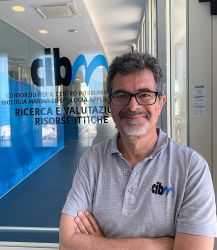 He obtained his Master’s degree in Biological Sciences (1988) and his PhD in Fisheries Biology (1993).
He is currently working at the CIBM in Livorno as head of the marine fisheries research group.
His work focuses on fish and shellfish population dynamics, stock assessment, gear selectivity, environmental impact of fishing gear, fisheries management, as well as biology and ecology (reproduction, feeding, species assemblage).
He obtained his Master’s degree in Biological Sciences (1988) and his PhD in Fisheries Biology (1993).
He is currently working at the CIBM in Livorno as head of the marine fisheries research group.
His work focuses on fish and shellfish population dynamics, stock assessment, gear selectivity, environmental impact of fishing gear, fisheries management, as well as biology and ecology (reproduction, feeding, species assemblage).
Since 2002, he has been involved in the EU Data Collection Framework: he has gained expertise in data collection, the design and implementation of experimental and monitoring surveys, familiarity with the EU CFP and with aspects of the Marine Strategy Framework Directive (MSFD).
Over the past 20 years, he has coordinated and participated in several European and national research projects/grants and is the author/co-author of numerous scientific publications.
He takes part in the working groups of STECF and GFCM, as well as other international and national fisheries committees. From 2009 to 2015, he was chairman of the Nekton and Fisheries Committee of the Italian Society of Marine Biology.
The EcoeFISHent project
EcoeFISHent is a European project that promotes a circular and sustainable model to enhance the value of by-products from the fishing industry, integrating the blue and green economy.
The aim is to transform fish processing by-products into ingredients for food supplements, cosmetics and biodegradable packaging materials, as well as fertilisers and biodiesel oil.
Moreover, the EcoeFISHent partnership is working to develop and implement a marine environment protection programme through the collection, recovery and recycling of abandoned and/or discarded fishing nets, which will be used to produce automotive components and packaging for cosmetic products. This is a concrete initiative to reduce the impact on the marine environment and promote a more sustainable development.
More information at: ecoefishent.eu

This projecy has received funding from the European Union's Horizon 2020 research and innovation programme under grant agreement N° 101036428 "EcoeFISHent".
To receive the completion checkmark, watch 100% of the video.